
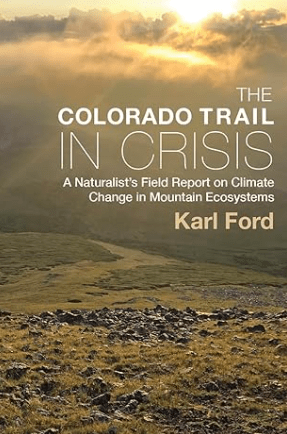
In The Colorado Trail in Crisis, retired naturalist and veteran thru-hiker Karl Ford brings both boots-on-the-ground experience and a scientist’s urgency to bear on one of the great environmental challenges of our time: climate change. Drawing from his re-hikes of the Colorado Trail in 2020 and 2021, Ford offers readers a thoughtful hybrid of trail memoir and popular science—a book filled with ecological insights, historical context, and a passionate call to action.
Ford’s deep knowledge of the Colorado high country shines throughout. Readers will appreciate his engaging review of Colorado’s life zones, his observations on apex predators, and the background he provides on bighorn sheep as climate indicators. Particularly moving is his history of early explorers and Indian tribes, with a heartfelt spotlight on Chief Ouray that adds emotional depth to the narrative.
But the heart of the book lies in its documentation of what Ford calls the “trifecta of death” for western forests: climate change, wildfire, and beetle kill. The data is sobering—40% of the high-elevation forest in the San Juan National Forest affected, with regeneration prospects for Ponderosa, Douglas Fir, and spruce increasingly bleak. Ford explains the science clearly and effectively, outlining how warming and drying trends are limiting forest recovery, and how declining snowpacks threaten water supplies.
At times, the book’s structure can feel disjointed, with trail recollections interspersed between long academic passages. While the scientific content is rich and informative, the tone can verge on dry, and a more cohesive narrative arc might have helped sustain momentum. Some readers may also find Ford’s political asides a bit blunt—though his passion is undeniable and his convictions admirable.
Where the book truly excels is in its final sections, which focus on solutions. Ford’s recommendations are practical and timely: discourage campfires on the trail, implement smarter forest treatments, and build more fire-resistant homes in vulnerable areas. His refusal to simply lament what’s lost, and his emphasis on what can still be saved, offer a hopeful counterpoint to the dire environmental picture.
Overall, The Colorado Trail in Crisis is a heartfelt and timely contribution to the ongoing conversation about climate resilience in the American West. Hikers, conservationists, and anyone concerned about the future of our forests will find much to learn—and much to admire—within its pages.

 Trail Memoir