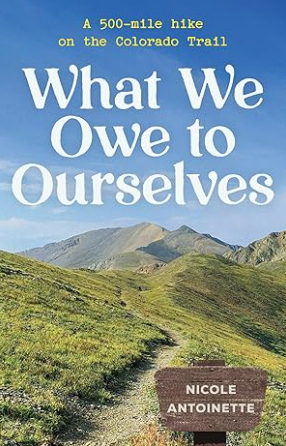
Nicole Antoinette’s What We Owe to Ourselves is a captivating memoir of her thru-hike on the Colorado Trail—a journey she and I happened to undertake the same year. At one point, we were even within a few days of each other. Though we weren’t fated to cross paths, her book made me feel like I was right there with her, sharing the highs, lows, and everything in between.
The story begins with an introduction to her “trail family,” a colorful cast of characters who start the hike together. It doesn’t take long for Antoinette to realize the price of being the slowest in the group. Her candid reflections—“it feels like they are fast at me, and it fills me with rage”—are relatable and funny. Ironically, her slower pace ends up being her strength; others drop out due to nagging injuries from overexertion, while she presses on.
Where this book really shines is inside Antoinette’s mind. Her internal world is fascinating—an eloquent mix of fear, humor, and hard-won resilience. She’s remarkably perceptive, describing the physical and mental toll of thru-hiking with brilliant clarity: “It felt like a bomb had gone off inside my body.” At the same time, she peppers the narrative with dry humor about everything from sweaty eyeballs to awkward van rides, keeping the tone light even in moments of adversity.
One of the most gripping parts of the book is when Antoinette decides to continue her hike alone. Her fear of hiking solo echoes the same feelings I had, especially about storms above treeline. Her description of a treacherous 14.5-mile stretch at high altitude under threat of lightning had me biting my nails and cheering her on. And her honesty about the relief of being alone—free from worrying about others—felt like a revelation.
Antoinette also weaves mindfulness into her narrative, referencing her sobriety and reflecting on anxiety. Her attempts to “let my mind be where my body is” feel authentic, not preachy. Small moments, like naming five things to ground herself in the present, offer simple yet profound insights into her inner journey.
Structurally, the book follows a daily hike journal format and has a strong, unique voice. Antoinette acknowledges Carrot Quinn as an influence, and you can see the stylistic similarities. That said, the book isn’t without its flaws. Dialogue is sparse, and we don’t get a strong sense of her hiking partners’ personalities or appearances. Nature descriptions are minimal early on, though they improve as she starts feeling better and noticing more. Additionally, the lack of named trail landmarks until later in the book can make the journey feel a little disorienting.
On the practical side, Antoinette’s logistical mishaps—like misjudging gear for cold nights or freezing her water filter—are refreshingly honest. She offers gentle reminders (pack out your toilet paper!) and good arguments for carrying backup water purification tablets. Younger hikers may resonate with her tendency to push her body hard, but Antoinette reflects critically on this, noting how the obsession with speed and distance can detract from the magic of the experience. Her eventual epiphany about slowing down—“my obsession with whether or not I’ll be able to finish this hike today is ruining the magic of it”—is a hard-won lesson.
Overall, What We Owe to Ourselves is a worthy and compelling read. Its single point of view may feel a bit narrow at times, but Antoinette’s honesty and self-awareness carry the narrative. By the end, you can’t help but admire her determination to stay by her own side—a journey as much about self-discovery as the miles she covered.
 Trail Memoir