

Published in 1974, Pilgrim at Tinker Creek chronicles Annie Dillard’s rambles near her home in rural Virginia. The book won the 1975 Pulitzer Prize for General Non-fiction. And Edward Abbey labeled Dillard as Thoreau’s “true heir.” Pilgrim is a giant in the “humans encounter nature” genre.
Structured in four sections, one for each season, there is minimal plot. But Dillard’s descriptive and metaphorical powers, the soul of the book, are light years ahead of most memoirists, giving her permission to bend other rules at will.
Though she mostly journeys on foot, the emphasis is not on the journey but on observing what’s at the arrival. This is by no means a trail memoir—Dillard rarely follows any path—yet it includes many of the familiar trail memoir elements. Most importantly, it’s a master class in observing and describing nature. I learned how to stalk muskrats and why I don’t really want to watch any grasshopper activities very closely.
Dillard described her work as a “book of theology” and references to God appear routinely. She argues that man’s self-consciousness cuts us off from both God and nature. And she wrestles with whether there is a reasonable God at all.
At times the book is a meditation on suffering and death. There are numerous unblinking accounts of nature’s most gruesome acts. Dillard wonders, out loud and in subtext, why God made the world as he did.
While her arguments are of general interest, they are clothed in an intellectualism that escaped my modest powers on many occasions. Enlightenment must await a second or third read.
Pilgrim ends with a tribute to the complexity and inscrutability and terror and beauty of the created world. But before that, when Dillard takes a stripped-down camping trip to the Lucas place, there is respite from the philosophizing.
She packs a sandwich, canteen, flashlight, thin foam pad, and sleeping bag for an ultralight night in the woods. And drifting off to sleep, she is simply “wrapped and enwrapped in the rising and falling real world.”
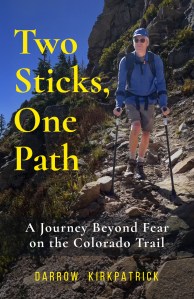
 Trail Memoir