
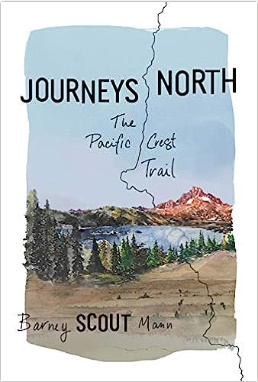
Barney Scout Mann is considered an elder statesman of the trail community. He’s been backpacking most of his life, is a triple-crowner, and has contributed to our iconic national trails through leadership positions at the Pacific Crest Trail Association, the Continental Divide Trail Coalition, and the Partnership for the National Trails System.
His Journeys North: The Pacific Crest Trail is an ambitious trail story about multiple simultaneous thru hikers. Mann takes the unique approach of narrating the experience of other hikers on the trail while also participating in the hike in a mostly background role himself. Published in 2020 about a 2007 hike, Mann spent years researching and polishing his story, and it shows. The well-crafted book offers some delightful moments, especially when the parallel stories along the trail intersect.
From one perspective, this is not primarily a trail book. The story hops around between different people at different places on the trail and there is little sense of moving along a continuous footpath. There are some scenic descriptions, some brief asides about the process of long-distance hiking, and a bit of adventure especially in the snow at the end. But the trail itself, even stunning sections like the High Sierra, is a minor character rarely mentioned. For Mann, it’s the people and their backstories that count.
At one level the book is a portrait of three couples, including Mann and his wife, hiking the trail. But the book isn’t that tidy, and the story can be complex to follow at times. There are a dozen or more significant characters present for portions of the hike. Mann takes a deep and sometimes quite intimate dive into some of their personal lives, particularly one character’s. Not all of that material is strongly connected to the hike. This gives the book a biographical flavor that may or may not suit readers looking for pure trail memoir. How you feel about the book could come down to whether you take a strong interest in that one character or not.
However the story strikes you, Mann deserves kudos for contributing a unique book to trail literature, and for using his professional skills to ensure the future of our beloved long-distance trails. Thank you Scout.
 Trail Memoir