
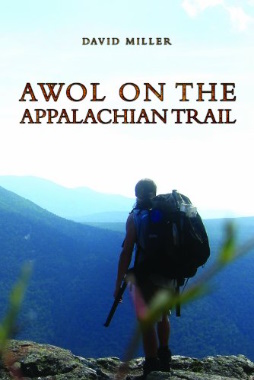
AWOL on the Appalachian Trail.
If Amazon reviews are an indication, David Miller’s AWOL on the Appalachian Trail may be the third-best selling trail memoir of all time, behind only Wild and A Walk in the Woods.
Published in 2010 about a 2003 hike, Miller had a jump on many writing trail memoirs. And his book enjoys one other advantage: After his hike, Miller went on to create the immensely popular AT Guide. It’s arguably the most complete guidebook to hiking the AT with its extensively updated information on trail landmarks and services. Any hiker using Miller’s guide is likely to also become aware of his memoir.
Miller’s book begins as a straight-ahead trail journal most likely to appeal to trail geeks and those preparing to walk the AT. It gives the flavor of a long hike along with tips about what to expect along the trail. There is useful general information on history, geography, and logistics, though the gear advice is necessarily dated given a hike completed twenty years ago.
But Miller isn’t a typical thru-hiker, if such an animal exists. His unique perspective comes from being a mid-career family man who decides to go “AWOL” from life, spending five months on the AT. Miller’s decision is carefully contemplated. He doesn’t strike us as the reckless sort. Both of his parents have serious health problems and he can read the writing on his future wall. He’s always dreamed of hiking the trail. But if he waits until retirement, it might be too late.
With this resolve and the support of his wife and daughters, he quits his secure software job and begins to hike. There is no competency shakedown for Miller. He’s a seasoned backpacker and quickly shakes out the remaining kinks in his kit. He shortly begins hiking long double-digit and twenty-something mile days. Though ultimately that pace brings negative consequences as he works through a series of leg, ankle, and foot problems in the first half of the hike.
Miller’s experience also colors his narrative in the early chapters of the book with occasionally pedantic observations on other hikers. However, before long, the trail softens him and we begin hearing self-deprecating anecdotes (his disdain for slackpacking wanes), and detect his genuine fondness for his fellow thru-hikers. At this point I began to enjoy his wry, curmudgeonly humor. Miller also seems to have a photographic memory for trail names and we are treated to anecdotes on dozens of his fellow travelers and their personalities. His relationships with other thru-hikers are the book’s center of gravity.
By contrast there is little scenic description until the final chapters in New Hampshire and Maine. But, when he indulges, I loved Miller’s vivid language. Hiking through soaked Virginia fields in the rain is like “like walking through a car wash.” And traversing the infamous rocks of Pennsylvania is like “walking thru a child’s room with all the toys out on the floor.”
Though we detect some distant tensions, the book is not some dramatic exploration of Miller’s past or psychology. There is very little backstory. But he nevertheless brings depth to his reflections, especially later in the book.
Long-distance hiking is an enforced simplification of life. Miller writes about “unloading the attic of his mind.” He appreciates the quiet and clarity of the forest, sensing the emotional liberation of his thoughts. And he uses the opportunity to reflect on his nonconformity to the mainstream lifestyle he left behind.
I valued Miller’s reflections on what the trail has to teach us about “normal” life, especially for those mid-career or further along. Yes, parents need to live dreams of their own while simultaneously raising a family. Kids need to see that too. Bravo.
Why did Miller do the hike? He tells us he “wanted to make his life less ordinary,” an urge that all iconoclasts can appreciate. Hiking the AT is a decision voluntarily made and fully-owned. Unlike so many paths in life.
Years later he confesses in his afterword that he misses his long-distance hiking days. But he finds redemption in the sadness. For five revelatory months he lived life with the open, raw, refreshing outlook of youth. And, if he chooses, if any of us chooses, we can do so again.
 Trail Memoir